

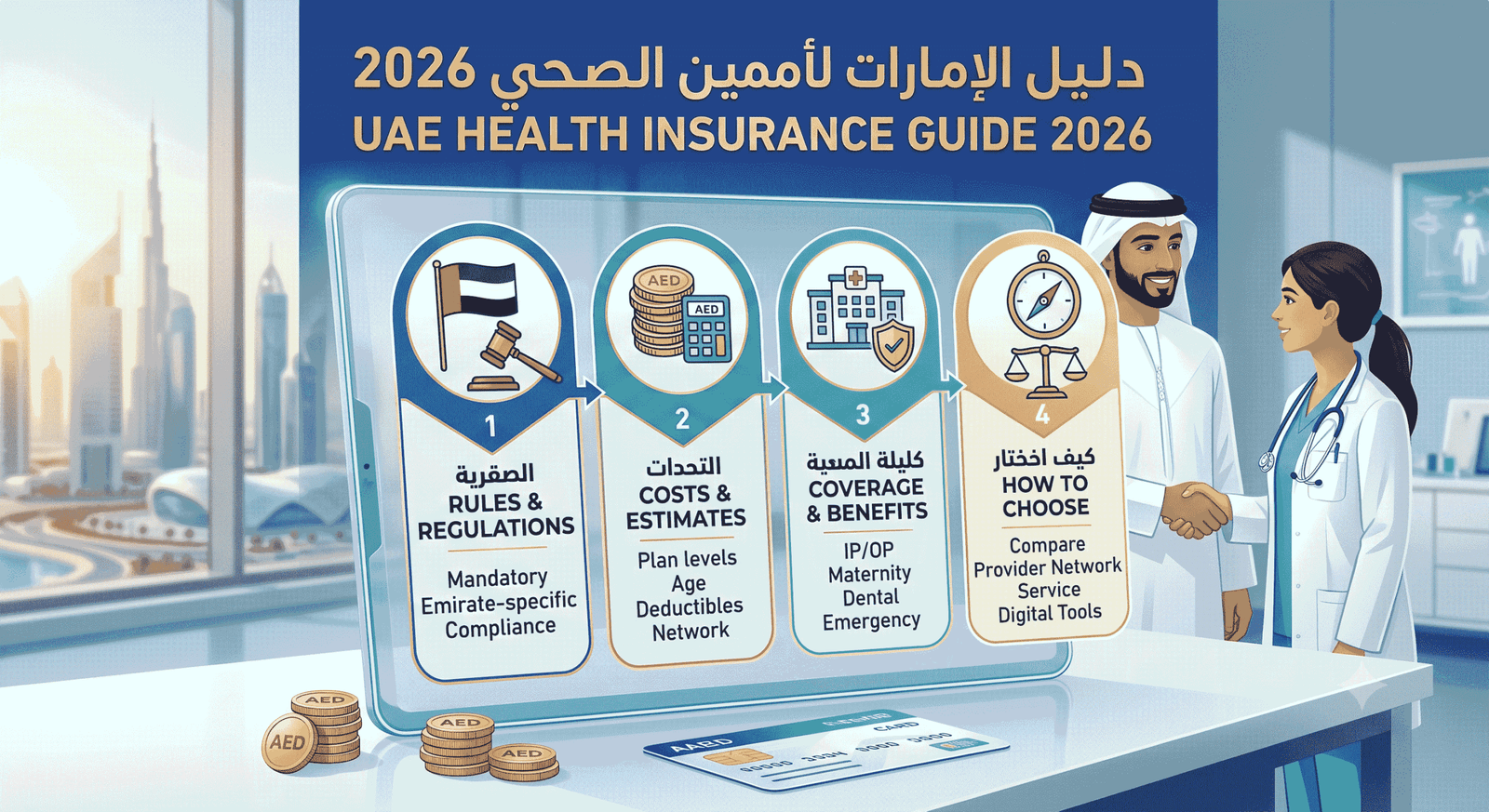
Navigating medical care through this UAE health insurance guide will help you secure premier treatment across the region while avoiding costly out-of-pocket expenses. A single visit to a hospital or specialist in the Emirates can easily amount to hundreds or thousands of dirhams without proper medical coverage.
Health insurance is compulsory for expats and UAE residents. Employers are legally required to offer coverage for eligible staff, whereas self-sponsored residents must secure their own plans. Expenses can range from basic plans priced around AED 320–900 annually to extensive global coverage costing over AED 20,000 per year.
If you are moving to the UAE, renewing your residency visa, or sponsoring family members, understanding how healthcare policies work will protect your finances and ensure seamless compliance with local laws.
What Is UAE Health Insurance and How Does It Work?
The UAE health insurance system consists of public healthcare services and a sizable private healthcare sector. All seven emirates have modern hospitals, specialist clinics, emergency services, and advanced treatments that residents can benefit from.
The mechanism of Health insurance is that residents can seek medical services at approved hospitals and clinics while the insurer pays for qualified healthcare services as specified in the policy.
Health Insurance is like a Financial Safety Net. You pay a set premium each year, and your insurance company aids in paying the high costs of medical bills that threaten to affect your savings.
In the UAE, insurance is regulated by different authorities based on geography:
| Emirate | Main Healthcare Authority |
| Dubai | Dubai Health Authority (DHA) |
| Abu Dhabi | Department of Health (DoH) |
| Northern Emirates | Ministry of Human Resources and Emiratisation (MOHRE) and federal authorities |
Laws & Regulations On UAE Health Insurance
The UAE has implemented a compulsory health insurance system that underpins the capacity of all aspects of ongoing resident and work-associated healthcare programs. Regulation of health insurance provision is at the federal and emirate levels, with compliance assessed by authorities such as the Dubai Health Authority (DHA), the Department of Health Abu Dhabi (DoH) and the Ministry of Human Resources and Emiratisation (MOHRE).
UAE laws require employers to insure required private-sector employees, while self-sponsored residents are expected to purchase their own policies. Following this UAE health insurance guide, private-sector workers and domestic workers in the Northern Emirates must maintain active coverage across all seven emirates.
Is Health Insurance Mandatory in the UAE?
Yes, in a further effort by the UAE health authorities to meet their objectives and targets, residents by law must have health insurance.
The requirement applies to:
- Private-sector employees
- Domestic workers
- Self-sponsored residents
- Freelancers
- Golden Visa holders
- Investors and owners of businesses with no employer coverage
During residency visa processes, a valid health insurance policy is also needed.
Without active insurance, residents could stand to see:
- Visa processing delays
- Financial penalties
- Personal responsibility for medical expenses
What Does UAE Health Insurance Cover?
Most UAE health insurance plans cover basic medical services depending on the plan level.
Basic Coverage Usually Includes:
| Service | Coverage |
| Doctor visits | GP and specialist consultations |
| Hospital treatment | Admission, surgery, and inpatient care |
| Emergency services | Ambulance and emergency treatment |
| Diagnostics | Blood tests, scans and imaging |
| Medication | Prescribed medicines |
| Preventive care | Vaccinations and health checks |
UAE Health Insurance Plan Types Explained
Basic Health Insurance Plans
Minimum medical coverage required under basic plans
They are suitable for:
- Employees who need legal compliance
- Low-risk populations with minimal health care demands
- Lower-cost protection
Typical cost:
- AED 500–900 per year
Basic plans usually have:
- Restricted hospital networks
- Higher co-payments
- Lower coverage limits
Mid-Range Health Insurance Plans
Mid-tier plans offer better flexibility.
They usually include:
- Larger hospital networks
- Specialist consultations
- Better outpatient benefits
- Some maternity coverage
- Dental or optical options
Typical cost:
- AED 3,000–6,000 annually
- Families and professionals alike find these plans attractive.
Comprehensive Health Insurance Plans
Comprehensive plans provide broader protection.
They may include:
- Premium hospitals
- Worldwide treatment options
- Lower out-of-pocket costs
- International coverage
Typical cost:
- AED 8,000–20,000+ annually
Usually, this type of plan is selected by executives, frequent travellers, and those seeking maximum coverage, e.g families.
How Much Does Health Insurance Cost in UAE?
UAE health insurance cost is based on several factors:
- Age
- Medical history
- Coverage level
- Hospital network
- Number of family members
- Geographic coverage
Average Annual Health Insurance Costs
| Plan Type | Approximate Cost |
| Basic individual plan | AED 320–900 |
| Mid-range plan | AED 3,000–6,000 |
| Comprehensive plan | AED 8,000–20,000+ |
| Family plan | AED 15,000–30,000+ |
How to Choose the Best UAE Health Insurance Plan
Choosing the cheapest plan is not always ideal. Following a structured UAE health insurance guide makes evaluating your actual healthcare needs much easier before committing to a contract.
Follow these key steps:
Check Your Healthcare Needs
Ask yourself:
- Do I visit doctors regularly?
- Do I need maternity coverage?
- Do I travel internationally?
- Do I have ongoing treatments?
Compare Hospital Networks
Your favorite hospital may not be in a low-cost plan.
Always check:
- Nearby clinics
- Specialist availability
- Emergency facilities
Understand Co-Payments
With a lower premium, you may instead end up paying more out-of-pocket when using healthcare services.
Example:
Some plans require you to pay 20–30% of costs for certain medical services.
Review Exclusions
Always check what the exceptions are.
Common exclusions include:
- Cosmetic procedures
- Experimental treatments
- Non-medically necessary procedures
How to Buy or Renew Health Insurance in the UAE
UAE Health Insurance Guide provides a simple process for buying or renewing health insurance if you understand your requirements, compare suitable plans, and prepare the necessary documents. If you are an employee, an expat, a freelancer, a Golden Visa holder or a family sponsor, having an active health insurance plan in the UAE is crucial for accessing healthcare and complying with residency regulations.
Steps to Buy Health Insurance in the UAE
Choose the Right Health Insurance Plan
Compare UAE health insurance plans based on your budget, medical needs, hospital networks, coverage limits, and benefits such as maternity, dental, or international coverage.
Choose a Licensed Insurance Provider
Select a UAE-approved insurance company to get UAE-compliant medical insurance policies. Before buying the insurance, verify the hospital and clinic network, the claims process, and customer support.
Submit Required Documents
Most insurers require:
- Passport copy
- A copy of the UAE residence visa. Copy of UAE Residence Visa.
- Emirates ID
- Personal details
- Medical information (if necessary)
Pay the Premium and Activate the Policy
Once you have chosen your plan, you should pay the premium via the offered payment method. Your policy is accepted, and you’ll be able to use a covered health care service once it’s accepted.
How to Renew Health Insurance in UAE
Renewing your UAE health insurance policy before expiry helps avoid coverage gaps, medical expenses and visa-related issues. Most insurers will provide notice of their policy’s renewal before it expires.
Typically, the renewal process will involve:
- Analysing your existing cover and benefits
- Reviewing and comparing insurance plans and premiums to find the best policy
- Updating personal information
- The Premium for renewal
- Bringing in the new policy document
The employee must coordinate with their HR department, and a self-sponsored resident, freelancer, and a Golden Visa holder should renew their insurance policy individually with their insurance company.
FAQs
Is health insurance mandatory in the UAE?
Yes. For UAE residents, health insurance is compulsory. Employees eligible for coverage are enrolled by their employers while self-sponsored residents manage their own policies.
How much does UAE health insurance cost?
The basic plans fall in the range of AED 320 to 900 p.a., while the comprehensive plans are more expensive, with coverage levels, age, and benefits varying but can go over AED 20,000.
Can expats buy their own health insurance in the UAE?
Yes. Individual health insurance plans can be bought by expats who do not have employer coverage.
Does UAE health insurance cover maternity?
Many mid-range and comprehensive plans include maternity coverage; the waiting periods and limits vary by company.
Do Golden Visa holders need health insurance?
Yes. Health insurance for Golden Visa holders will be the responsibility of the visa holder.
Conclusion
The UAE health insurance guide indicates that the right health insurance plan is necessary for protecting yourself against unpredictable medical expenses while also fulfilling the residency requirement in the UAE. The best health insurance package for you depends on how much cover you need, where you are living or travelling, and what your average medical expenses are, budget, and preferred hospitals.
Compare coverage limits, hospital networks, exclusions, co-payments and claim services instead of looking only for the lowest premium before buying or renewing a policy.
A good UAE health insurance plan will help you financially in times of need while protecting to use treatment services without hurdles.

