
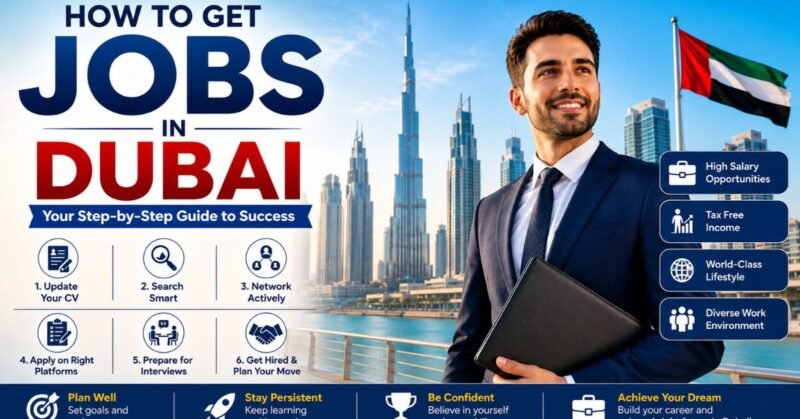
Trying to find a job overseas can feel pretty exciting, but it can also be kinda tough. You may have the right skills and experience; however, you might not know exactly where to begin. If you’re looking for jobs in Dubai, it really matters that you understand the local hiring process and the job market so you can make smarter picks.
Dubai brings opportunities in finance, healthcare, hospitality, advertising and marketing, and even innovation, plus more fields than most people expect. In this guide, you’ll learn how to identify fitting paths, polish a Dubai-ready CV, practice on online platforms, collaborate with recruiters, and build meaningful professional connections.
Which Are the Top Industries Offering Jobs in Dubai?
Dubai has a diverse economy, which means professionals from specific backgrounds can find appropriate career possibilities. The key sectors supporting jobs in Dubai include generation, finance, hospitality, healthcare, real estate, production, retail, and commercial enterprise services. Your chances will depend on what you bring, like your qualifications, experience, and skills, as well as what employers need right now.
Before you jump into your job search, try to explore the industries that align with your work history. Don’t just hit “apply” for every opening you see; instead, concentrate on roles where your background can actually meet a real business need. This way, your applications may end up feeling more relevant, and it can seriously help you get noticed by hiring managers, even when the competition is pretty high.

| Industry | Common Job Roles |
| Technology | Developers, IT specialists, data professionals |
| Finance | Accountants, analysts, banking professionals |
| Hospitality | Hotel staff, chefs, managers |
| Healthcare | Doctors, nurses, medical specialists |
| Marketing | Digital marketers, content specialists |
| Business | Sales, HR, consulting, management |
| Construction | Engineers, project managers, technicians |
Technology is still a really attractive area for skilled professionals; it just seems to keep pulling people in. Dubai tech jobs can run from software development to data analysis and even cybersecurity and cloud computing, along with other specialised roles that sound similar but are not the same. Similarly, people with experience in banking, consulting, advertising, and business development can look for openings across Dubai’s corporate sector.
At the same time, hospitality and tourism also matter a lot for employment, since Dubai keeps welcoming visitors year-round. Candidates with a customer service background, hotel management know-how, food service experience, or event work might end up in roles here.
Which Jobs Are in Demand in Dubai?
The job market in Dubai changes whenever companies grow, and new industries emerge. Still, many employers keep looking for people with technical knowledge, specialised credentials, business skills, and solid communication abilities. Your first step should be spotting roles that fit both your experience and current market demand.
For example, candidates with strong analytical and programming skills can explore data scientist jobs in Dubai and related technology positions. Experienced developers may look for full-stack engineer jobs or back-end developer jobs, while business professionals can consider HR, customer success, marketing, sales, and business development roles.
Some areas worth exploring include:
- Data science and analytics
- Software development
- Human resources
- Digital marketing
- Banking and finance
- Business development
- Customer success
- Hospitality and tourism
- Cybersecurity and IT
- Engineering and construction
The best chance doesn’t always pop up from a job with an exciting name, or at least that is how it feels. First, check the required skills and the role’s responsibilities, then find out the pay, and consider your growth potential and the company’s reputation. Do this before you apply; otherwise, it’s easy to miss the real fit. Once you know which jobs fit, you can job hunt in Dubai and waste less time on gigs that aren’t quite right.
Get the Right Visa
Before you start working in Dubai, it is vital to grasp the visa rules that apply to you. For many worldwide travelers, it is possible to enter Dubai without organising a visa ahead of time, or you might obtain a visa on arrival, depending on your situation. However, permission to visit Dubai does not routinely mean you are allowed to work there. Legal employment usually requires the right employment visa and work authorization.
If you’re planning to look for jobs in Dubai while touring, check the latest Dubai visa requirements before travelling. A tourist or traveler visa may assist you in attending interviews and meeting potential employers, but you shouldn’t expect it to permit you to start paid work. Once you acquire a job offer, your company will normally walk you through the employment visa and sponsorship process.
Citizens Who Don’t Need a Visa for 90 Days
People from some countries can come to Dubai for up to 90 days under visa-free or visa-on-arrival arrangements. For example, eligible citizens of countries such as the United Kingdom, the United States, Canada, Australia, Japan, and several European countries may qualify for a 90-day visit period under the applicable UAE entry rules. This gives overseas job seekers time to connect with employers, attend interviews, and explore suitable career options.
Still, a 90-day stay is not the same thing as permission to work.
If you receive a job offer, make sure the required employment visa, employer sponsorship, and work authorisation are completed before you start working.
Citizens Who Don’t Need a Visa for 30 Days
Some nationalities may be eligible for a 30-day visa-on-arrival stay when entering Dubai. This may include citizens of countries such as China, Russia, India, South Africa, and several other nationalities, depending on Dubai’s current entry rules. Because visa policies can change, always check the latest requirements for your nationality before travelling.
A short stay can still be useful if you’ve already arranged interviews, meetings, or networking opportunities. However, remember that legally staying in Dubai and being legally employed are two different things. If you secure jobs in Dubai, you must complete the appropriate employment visa and work authorisation before starting work.
Get Your Health Card and Work Permit

After receiving an offer from an activity provider, you’ll need to complete the specified employment procedures before starting work. Depending on your situation, the process will include a medical health exam, identity documentation, insurance, and obtaining the appropriate Dubai work permit. Employers usually give guidance during this whole process.
Though it can feel a bit scattered. Your employment agreement really needs to include the key info, like your job title, earnings, expected working hours, benefits, and any other terms you agreed on, in writing. Before you accept any settlement, take a close look at it. Then double-check that every detail lines up with what you discussed with the employer, because small differences can sneak in.
The process may also generally consist of:
- Receiving an official job offer.
- Completing the required employment documents.
- Completing the necessary medical fitness procedures.
- Obtaining the work permit.
- Completing residence and identification procedures.
- Starting employment after the required authorisation is completed.
The exact system can depend on your company, profession, and situation. Therefore, verify the current requirements with your agency and the applicable Dubai authorities.
Know Your Job Market
Understanding the local employment landscape can help you plan your full time. Before applying for jobs in Dubai, study which industries are hiring, the qualifications employers need, expected salaries, and the skills generally stated in vacancies. That is especially beneficial for global applicants who aren’t acquainted with local recruitment practices.
Do not focus on the most common job titles. Study numerous vacancies for the same function and examine their requirements. You may start noticing which skills seem to appear time and again and which qualifications employers consider crucial. You can then use these statistics to improve your CV and make your applications more applicable.
Conduct Thorough Research About Job Industries
Start by picking two or three industries that kinda fit your experience and qualifications. Then look up current vacancies, check company websites, figure out salary expectations, and also scan professional communities, just to see where your skills actually land.
For example, if you’ve got experience in software development, you can explore tech roles, and if you’re more of an experienced accountant, then finance and banking opportunities might make more sense. This kind of targeted approach keeps your search more organized and helps you avoid wasting time on listings that don’t really match your background.
Check Out the Big Companies
See what companies match your chosen industry, and get a feel for what they do, their workplace vibe, current openings, and what they expect from hires.
Then put together a brief list of companies that look well aligned with your background and qualifications. After that, check their official career pages on a regular basis, and read each job description cautiously before you actually apply. This approach can help you spot what hiring managers really want from candidates in your space, not just what the job title kind of says at first glance.
When researching companies, look at:
- Current vacancies and job requirements
- Required qualifications and experience
- Company location and business sector
- Career growth opportunities
- Skills mentioned repeatedly in job descriptions
- Application deadlines and instructions
Don’t just send the same application to every company. A targeted Dubai job application can work way more effectively when you line up your experience with what the role actually asks. For example, if a company is looking for a digital marketing specialist with SEO experience, highlight your relevant campaigns, the tools you used, and the results you achieved, rather than just listing a bunch of unrelated skills.
Work on Your CV
Your CV is usually the first thing a recruiter sees, so it needs to make a strong professional impression, even if you’re rushing a bit. When looking for jobs in Dubai, don’t use the same standard CV for every vacancy, as it won’t work as well as you want. It helps to tweak your expert summary, your middle skills, or even the experience section in a way that it fits the precise role you are going for, not just vaguely.
A solid CV should be easy to read and help employers quickly understand what you can offer.
Instead of only listing each day’s responsibilities, focus more on achievements, like actual effects. For example, instead of writing that you “managed social media money owed”, you could explain how you grew target audience engagement, generated leads, or improved campaign performance, which sounds more unique and stronger.
A strong CV should normally include the following:
- Professional contact information
- A short professional summary
- Relevant work experience
- Key technical and professional skills
- Education and certifications
- Important achievements
- Relevant languages, if appropriate
Keep the information accurate and avoid adding unnecessary details. Hiring managers often review many applications, so a clear CV can make it easier for them to understand your qualifications.
Make a Dubai-Standard Resume
A Dubai CV format should present your experience clearly and professionally. Start with your most recent position and work backwards, focusing on experience that directly relates to the job you are applying for. Use simple formatting, consistent headings, and concise descriptions instead of filling the file with long paragraphs.
Your resume for Dubai jobs also has to match the expectations of the industry. A technology expert may want to highlight programming languages, software, tasks, and certifications, while a marketing professional may focus more on campaigns, analytics, content, and business results. Before submitting your CV, check it for spelling errors, outdated information, and besides-the-point info.
Apply Online
Online packages can make your job search in Dubai quicker and more organised. You can locate vacancies through employer websites, job portals, expert networks, and recruitment systems. But don’t apply randomly to every vacancy you see. Be aware of positions that match your experience, qualifications, and career aspirations.
Before submitting an application, read the whole job description. Check the specified requirements, salary, and application instructions. Then tailor your CV and cover letter to spotlight the experience that directly matches the position. Keeping a simple record of the businesses you’ve contacted can also help you follow up without losing track.
Apply for Jobs on Dubai Job Portals
Dubai job websites can give you access to vacancies across many industries. Popular platforms include LinkedIn, Bayt, Indeed, GulfTalent, and Glassdoor. You can search by job title, company, level, and region, which makes it less difficult to locate suitable positions.
When using Dubai job portals, create a whole profile instead of simply importing your CV. Add your work experience, training, skills, certifications, and applicable achievements. Keep your records up to date, as recruiters may find your profile even if you haven’t applied for a vacancy.
Useful platforms can include:
- LinkedIn Dubai jobs
- Bayt jobs Dubai
- Indeed Dubai jobs
- GulfTalent jobs
- Glassdoor Dubai jobs
Don’t rely on only one platform. Different employers and recruitment teams may use different websites. Checking several reliable sources can increase the number of relevant opportunities you discover.
How to Create a Profile on Job Portals in Dubai
Begin with your professional title and a suitable profile picture, if the platform permits one. Upload a precise summary that explains your experience, industry, key competencies, and the type of function you’re looking for. Your employment details should be accurate and consistent with your CV.
Make certain your online professional profile displays the same information as your resume. Recruiters can also examine each before contacting you, so variations in job titles, dates, or qualifications can create unnecessary questions
Consider a recruiter
Recruiters can be useful when you’re looking for jobs in Dubai, especially if you have experience in a specialised field. Recruitment professionals often work with companies that need candidates for specific positions. They may also know about opportunities that public job boards don’t widely promote.
However, don’t assume every recruitment agency is suitable for you. Research the agency before sharing personal documents or accepting any offer. Check its reputation, understand how the recruitment process works, and be cautious about anyone making unrealistic promises about guaranteed employment.
A recruiter can potentially help with:
- Finding suitable vacancies
- Reviewing your CV
- Preparing for interviews
- Connecting you with employers
- Explaining recruitment processes
- Identifying roles that match your experience
Your professional résumé should still be strong even when you’re working with a recruiter. A recruiter can introduce you to an employer, but your qualifications and interview performance will ultimately influence the hiring decision.
Contact a Recruitment Agency
When contacting a recruitment agency in Dubai, keep your message short and professional. Introduce yourself, mention your area of expertise, explain what type of role you’re seeking, and attach your updated CV when appropriate.
You can research Dubai recruitment agencies that specialise in your industry rather than contacting every agency you find. For example, technology professionals may benefit from agencies focused on IT recruitment, while finance professionals can look for recruiters who specialise in banking and accounting.
Before proceeding, ask about the recruitment process and whether the service involves any fees. You should approach legitimate employment arrangements carefully and never provide sensitive information without understanding who you’re dealing with.
Build Your Professional Network in Dubai

Professional networking can make a real difference when you’re searching for jobs in Dubai. Not every opportunity is advertised publicly, and some vacancies are filled through referrals. Professional contacts, or industry connections. Building genuine relationships can help you learn about companies, discover opportunities, and understand what employers are looking for.
You don’t need hundreds of contacts to start networking. Connect with professionals in your field through LinkedIn, industry events, conferences, online communities, and Dubai job fairs. Instead of immediately asking someone for a job, introduce yourself, show interest in their work, and build the relationship naturally.
Networking and Referrals Are a Must
Referrals can help your application reach the right person, especially when someone already knows your skills and professional background. Former colleagues, friends, classmates, and professional contacts may know about vacancies before they’re publicly advertised.
The key is to network professionally rather than asking everyone to find you a job. Participate in industry discussions, attend relevant events, keep your LinkedIn profile updated, and stay connected with people in your field. Over time, these relationships can lead to useful introductions and employment opportunities.
| Networking Method | How It Can Help |
| Connect with recruiters and industry professionals | |
| Employee referrals | Get introduced to potential employers |
| Dubai job fairs | Meet recruiters and hiring teams |
| Professional events | Build industry-specific connections |
| Online communities | Discover discussions and opportunities |
| Former colleagues | Learn about suitable vacancies |
Tips on How to Find a Job in Dubai on a Visit Visa
If you’re visiting Dubai while searching for employment, prepare before you travel. Research companies, identify suitable vacancies, arrange interviews when possible, and keep digital and printed copies of your CV. Most importantly, remember that searching for a position and legally starting employment are different things.
Keep these points in mind:
- Research companies before traveling.
- Apply online before and during your visit.
- Carry an updated professional resume.
- Attend scheduled interviews professionally.
- Build genuine professional connections.
- Check the current visa and employment rules.
- Never start work without the required authorization.
FAQs
What is the best way to find jobs in Dubai?
Use company career pages, job portals, recruitment agencies, LinkedIn, and professional networking. A targeted approach is usually more effective than sending the same CV everywhere.
Can foreigners apply for jobs in Dubai?
Yes. Dubai has a large international workforce and offers opportunities across many industries. Foreign workers must meet the relevant employment and immigration requirements.
Can I look for jobs in Dubai on a visit visa?
You may be able to search for opportunities and attend interviews depending on your visa conditions. However, a visit visa does not automatically allow you to work.
Which jobs are in demand in Dubai?
Technology, finance, healthcare, hospitality, marketing, engineering, sales, and business services offer opportunities for qualified professionals, although demand changes over time.
How should I prepare my CV for jobs in Dubai?
Keep your CV clear, professional, and relevant to the position. Highlight your strongest qualifications, experience, skills, achievements, and certifications.
Conclusion
Locating jobs in Dubai will become easier as you apply the technique with a clear plan. Start by way of understanding the industries that shape your capabilities, learning suitable employers, getting ready a strong CV, making use of reliable structures, and considering reputable recruitment organizations.
Don’t overlook networking and referrals. Building strong professional relationships can create opportunities that online applications alone cannot. With proper instruction, practical expectations, and consistent effort, you can enhance your chances of locating a position that fits your capabilities and career dreams.

